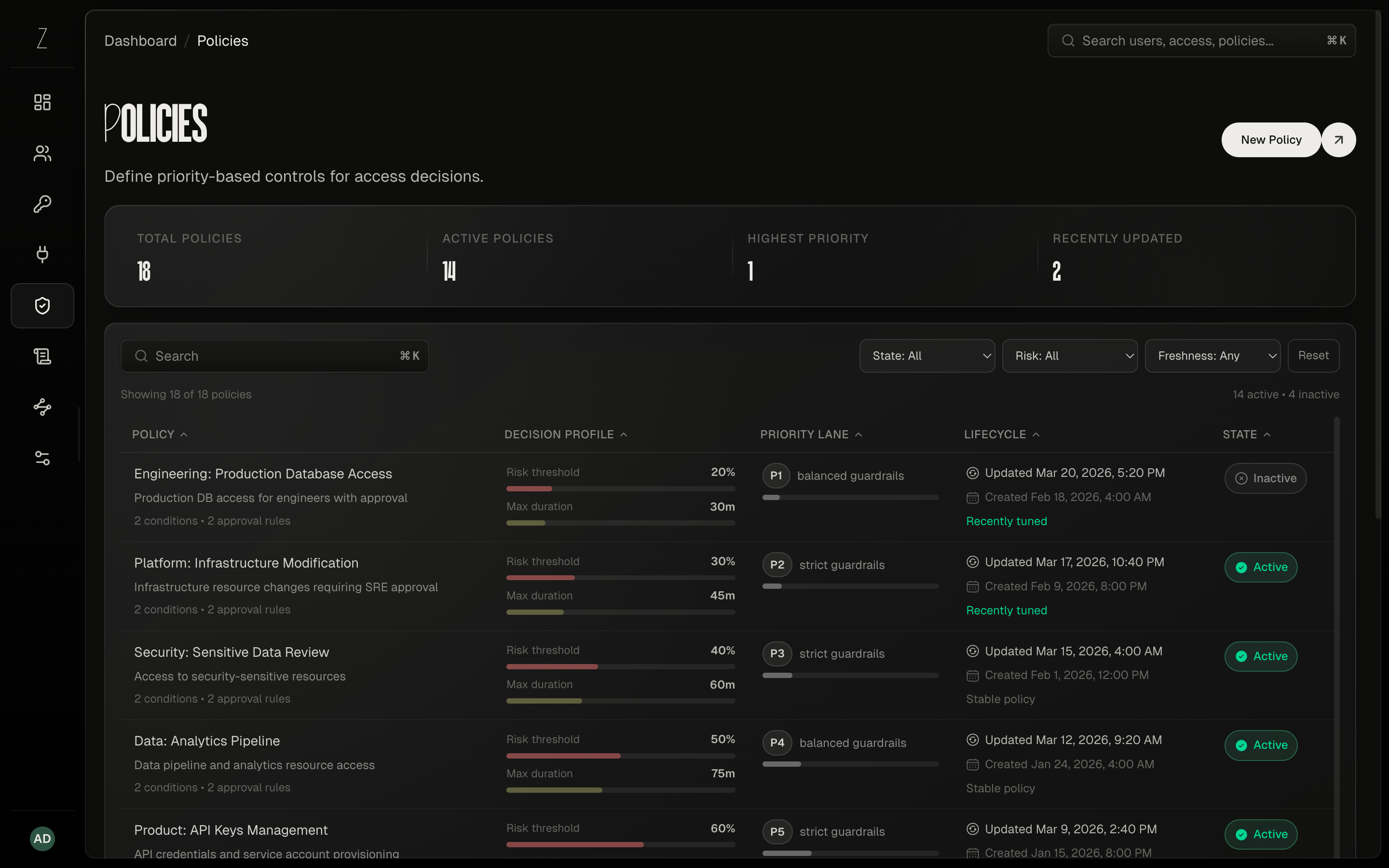
Anticipate risk before access turns into incident.

Anticipation

Risk-weighted scoring before access is granted.

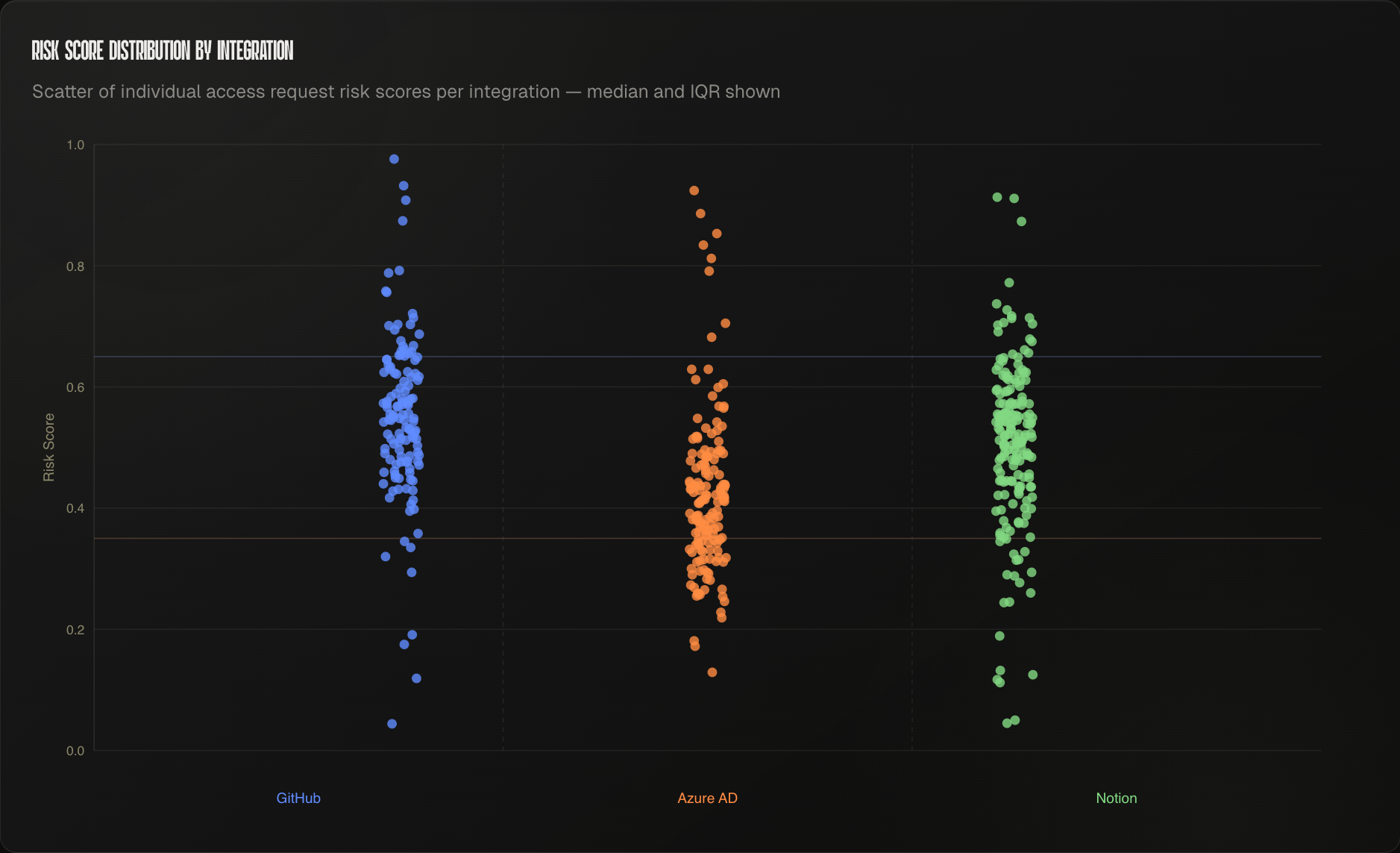
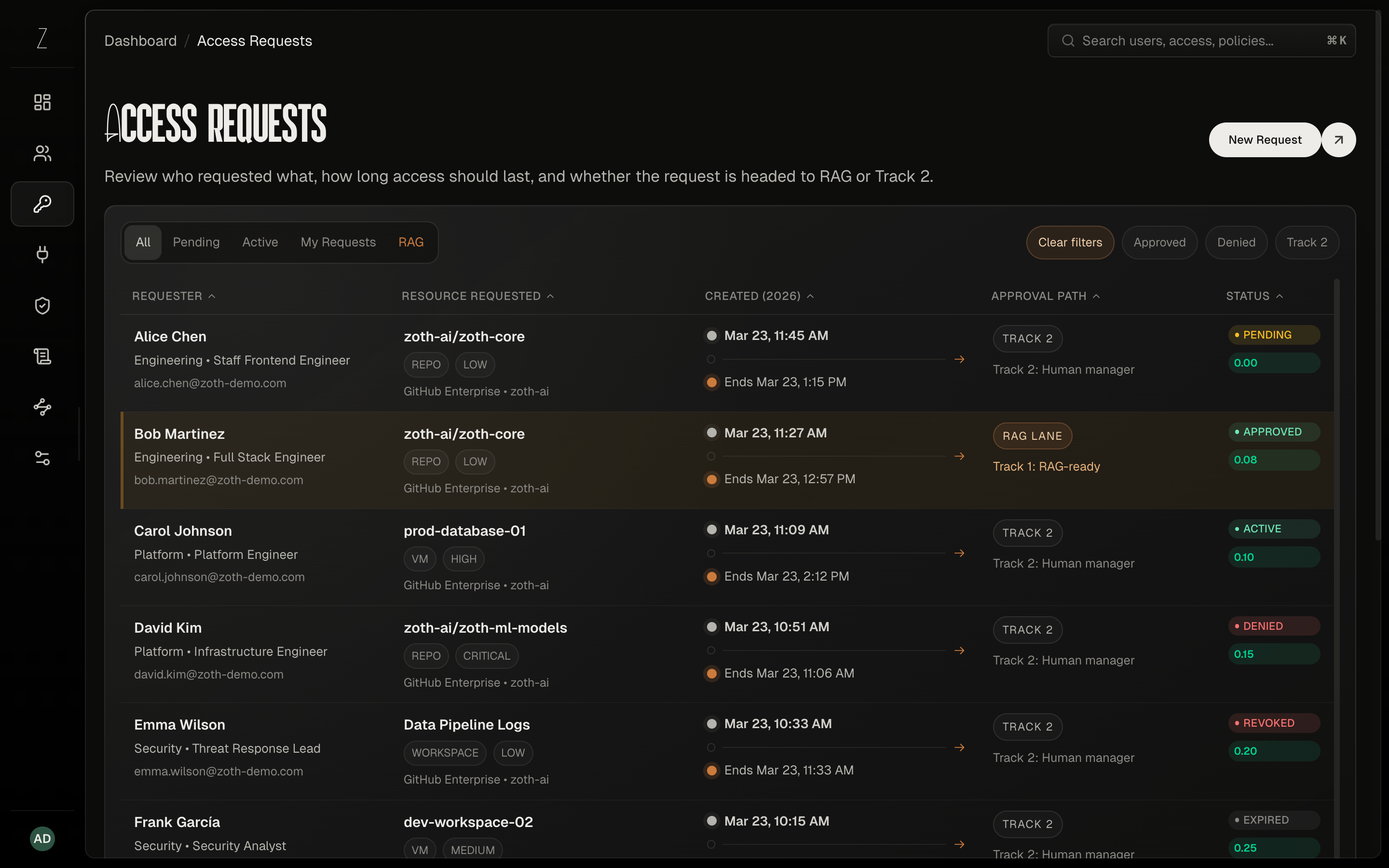
Every access request is scored against historical patterns, resource sensitivity, and requester context. Anomalies surface early. High-risk requests trigger manual review. Policy gaps become visible before they become incidents.

  • Risk-weighted scoring for all access requests
  • Anomaly detection across historical patterns
  • Early warning alerts for potential policy breaches
  • RAG-powered advisory for policy gaps
  • Behavioral deviation flagging based on context
12xfaster risk assessment
94%anomaly detection rate
<2sscoring latency
FIG. 4.1 / Risk Notebooksignals, context, advisory

The risk notebook groups the three things reviewers need before a decision: why the request is risky, what context changed, and which policy gap should be fixed.

Risk builds before the request arrives

Signals from history, timing, and resource sensitivity collect into a score reviewers can understand before they approve.

Riskzoth-coreLive

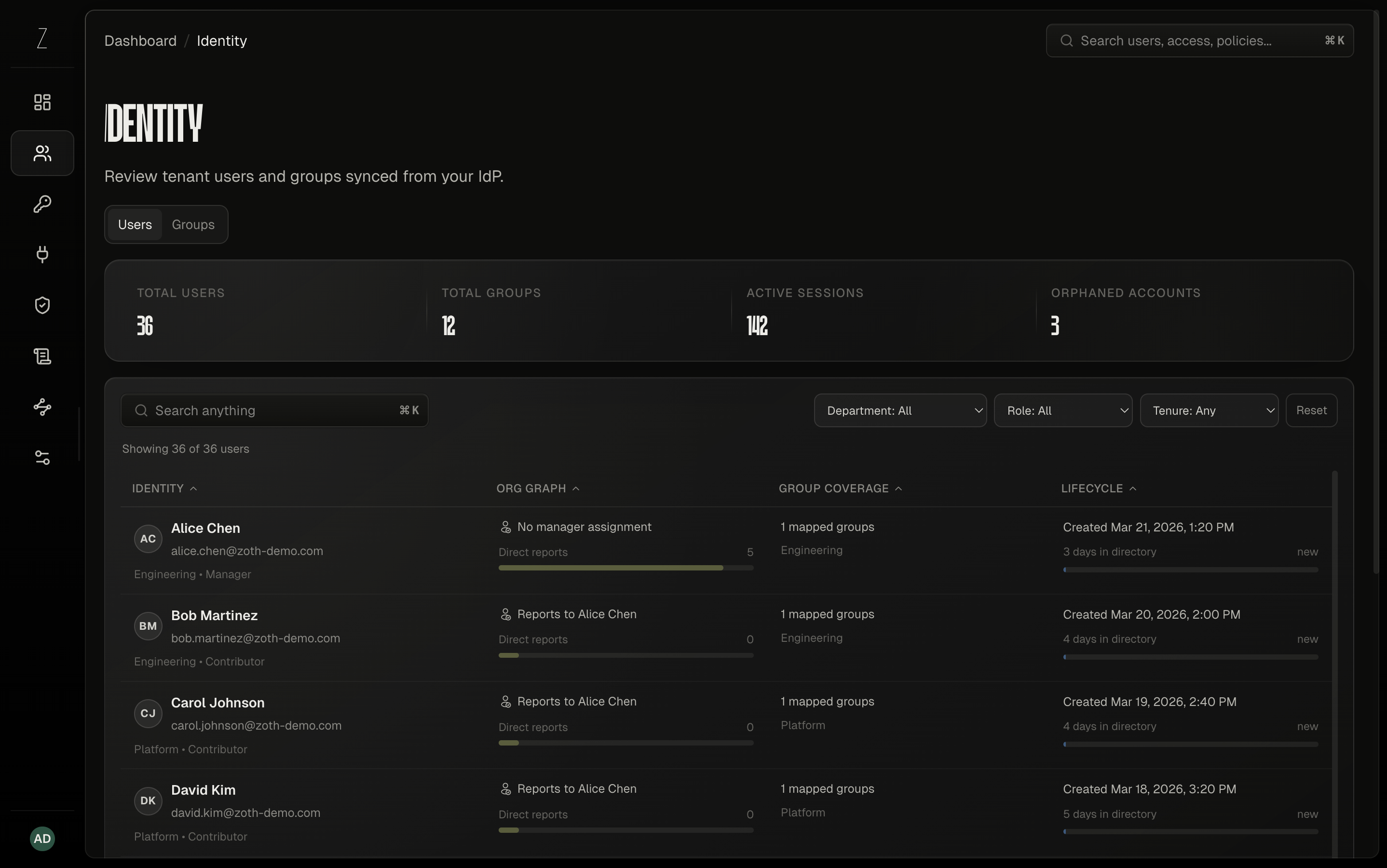
Org context changes the answer

A request from a manager, contractor, or service owner should not take the same route through approval.

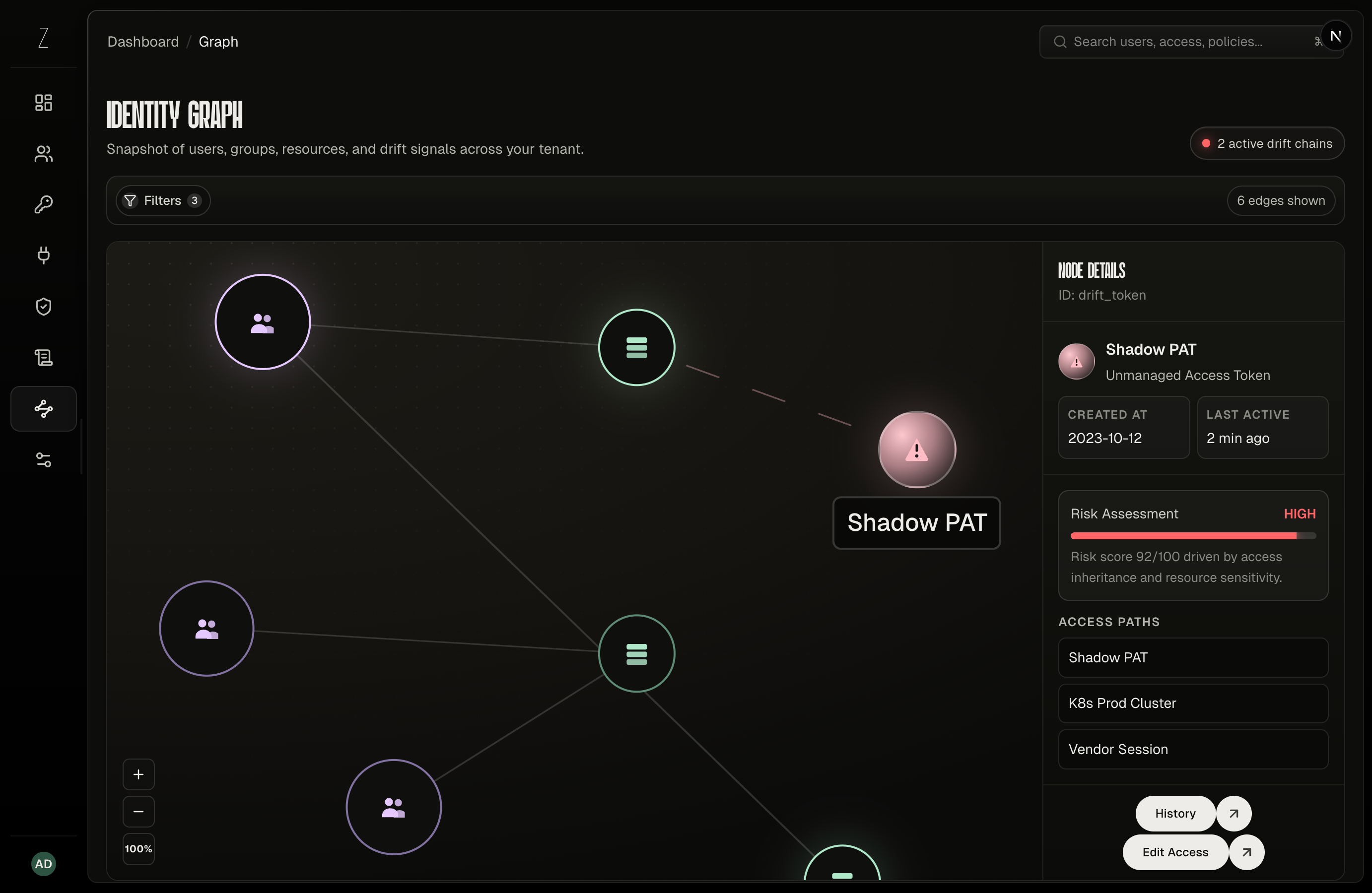
ContextIdentity graphSynced

Policy gaps become readable

Overlapping conditions, missing approvers, and sensitive exceptions surface as reviewable evidence, not tribal memory.

PolicyPolicy engineChecked
Risk Assessment

Surface high-risk requests automatically.

Risk scoring considers multiple factors: first-time requests, sensitive resources, unusual timing, scope expansion, and historical patterns. Critical scores route to manual review; low-risk requests proceed automatically.

RISK ASSESSMENT QUEUE
Live scoring
prod/database-admin
contractor-22
first requestsensitive resource
87
staging/deploy-key
dev-team-3
scope expansion
42
docs/editor
marketing-1
8
FIG. 4.2 / Risk Signalspredictive risk modeling

These components form the basis of our predictive risk model. By combining policy metadata, organizational structure, active permissions, and boundary definitions, Zoth identifies anomalies before authorization is granted.

Policy Attributes
Policy properties
Requires review
JIT eligible
Privileged resource

Analyzes rule metadata, JIT constraints, and conditional triggers to build a baseline of expected permission patterns.

Org Topology

Traces reporting chains, peer group access baselines, and manager relationships to identify behavioral deviations.

Access Graph

Traces dynamic, nested permission graphs and identity path chains to discover toxic privilege overlap and hidden risks.

Control Ring

Simulates policy changes and predicts downstream security impact, preventing configuration creep and compliance drift.

Capabilities

Intelligence that learns from your access patterns.

Zoth builds understanding from your access data. Risk models improve over time. Anomaly detection learns what is normal for your organization. Advisory responses ground in your specific context.

Contextual Risk Scoring

Each request is scored against historical patterns, resource sensitivity, and requester context. High-risk requests surface for manual review.

Anomaly Detection

Requests that deviate from normal patterns—unusual resources, timing, or scope—trigger anomaly flags before they reach approval workflows.

Trend Analysis

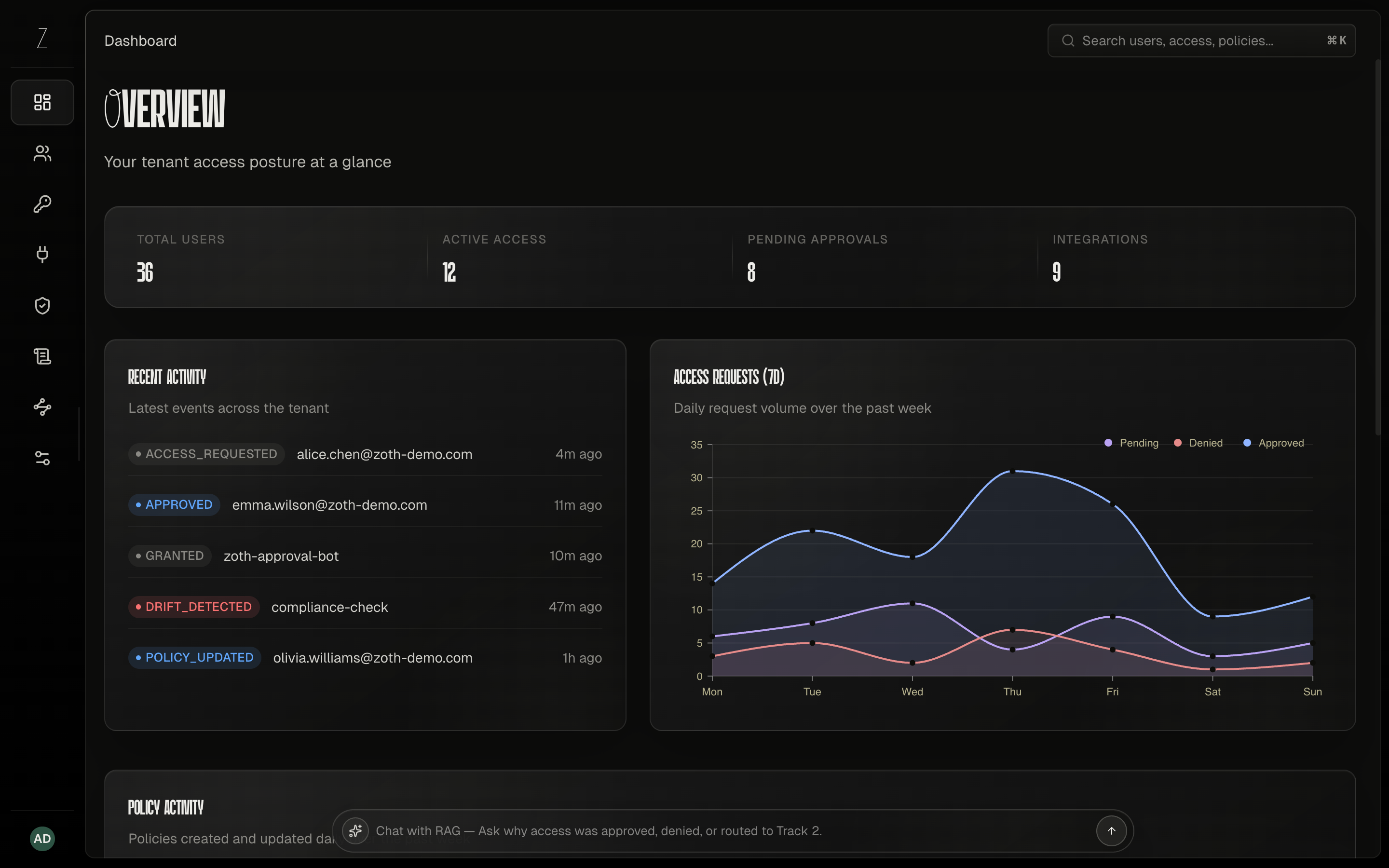
Historical data reveals patterns: which resources see standing privilege, which teams over-request, which policies need tightening.

RAG Advisory

Natural language queries about access patterns, policy gaps, and remediation strategies. Context-aware responses grounded in your data.

Advisory

Natural language queries about access patterns.

Ask questions about standing privilege, policy gaps, and remediation strategies. RAG-powered responses ground in your access data—not generic advice, but specific recommendations based on your patterns.

RAG ADVISORY
Query
"What resources have the most standing privilege?"
Response